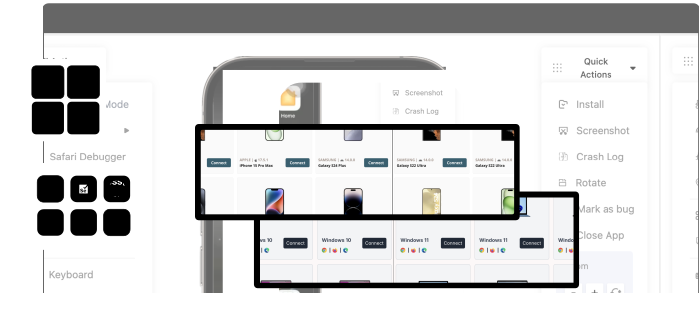

Over the past few years, we’ve worked with more than 500 testing teams. Startups with three engineers. Enterprises with dedicated QA organizations of fifty. Everything in between.
The gap between average teams and elite teams isn’t what most people assume. It’s not tools. The best-resourced teams are often the most frustrated. We’ve seen organizations with every testing tool imaginable still struggling to ship with confidence.
It’s not headcount. Some of the leanest teams we know ship the fastest with the fewest production bugs. Some of the largest QA organizations are the biggest bottlenecks. It’s not budget. Money can buy infrastructure, but it can’t buy the clarity to use it well.
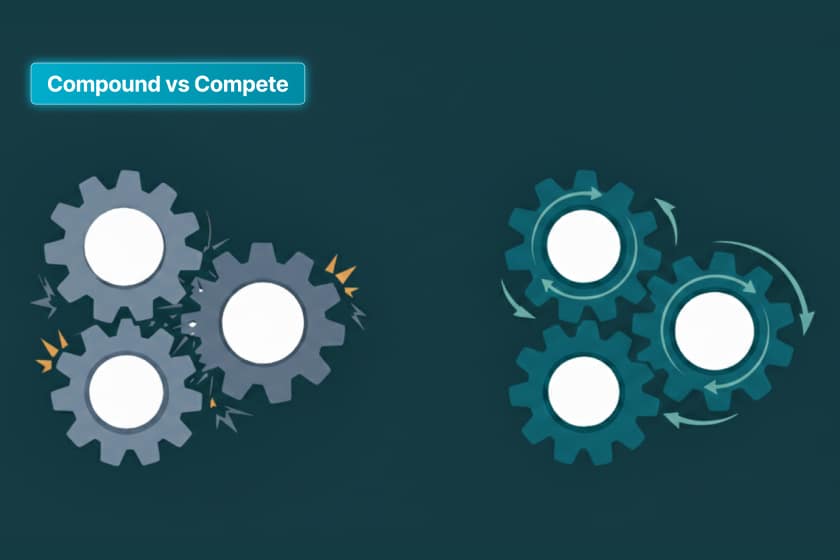
The difference comes down to one thing: do your testing systems compound or compete?
The Competing System
In most organizations, testing improvements fight each other.
Speed competes with coverage. “We can run faster if we run fewer tests.” Every acceleration requires a trade-off, a compromise, a risk accepted. Automation competes with maintenance. Every new automated test adds to the maintenance burden. The suite grows. Flakiness increases. Technical debt accumulates. Eventually, teams spend more time fixing tests than fixing bugs.
Data competes with clarity. More dashboards, more metrics, more visibility — and somehow less understanding. Teams drown in information while starving for insight. This is the trap most organizations fall into. Every improvement in one area creates drag in another. Progress feels like a zero-sum game. The system fights itself.
Teams in this state experience testing as a constant negotiation: How much coverage can we sacrifice for speed? How much maintenance overhead can we tolerate for automation? How many dashboards can we ignore before missing something critical?
It’s exhausting. And it never really gets better.
The Compounding System
In mature organizations, the opposite happens.
Speed enables better decisions. When feedback arrives in minutes instead of hours, teams can afford to be more selective. They don’t need to run everything “just in case” — they have time to run what matters and adjust. Better decisions improve signal quality. When intelligent systems filter what runs and what surfaces, the results that reach humans are higher quality. Less noise. More meaning. Failures worth investigating.
Better signal accelerates everything. When results are trustworthy, teams act on them immediately. No second-guessing. No lengthy triage. The path from “red” to “resolved” becomes predictable.
And then it compounds. Faster action means more cycles. More cycles mean more learning. More learning improves the system. The system gets faster and smarter over time. This is the maturity leap: the transition from a testing system that fights itself to one that reinforces itself.
Three Shifts That Create the Leap
The transition isn’t magic, and it doesn’t require replacing everything. It requires three specific shifts in how teams think about testing.
Shift 1: From “More Tests” to “Faster Truth”
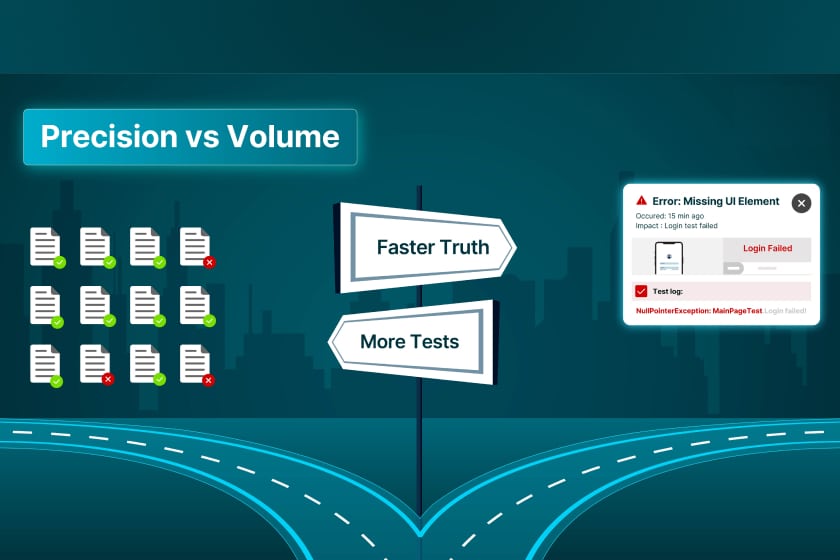
Average teams optimize for test count. Coverage percentages. Automation ratios. Activity metrics.
Mature teams optimize for time-to-confidence. How quickly can we know if this build is safe to ship? How fast can we get from commit to certainty?
This sounds like semantics. It’s not.
Teams focused on “more tests” add automation and hope it scales. They celebrate when the test count goes up. They worry when coverage percentages dip. Teams focused on “faster truth” remove friction before adding volume. They celebrate when feedback loops shrink. They worry when time-to-confidence grows.
The metric you optimize for shapes every decision downstream. Choose carefully. Speed isn’t a nice-to-have feature. It’s the foundation everything else builds on. When feedback is fast, teams experiment more. When teams experiment more, they learn faster. When they learn faster, quality compounds.
Shift 2: From “Automate Everything” to “Automate Decisions”
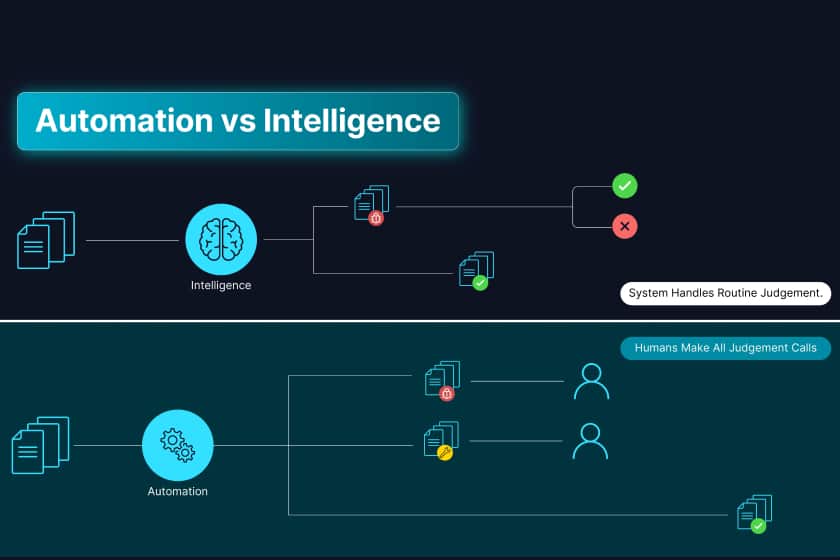
Average teams try to automate execution. Run the same tests every time, just faster. Scale by parallelizing. Reduce human effort by removing humans from the loop.
This works until it doesn’t. Test suites grow unwieldy. Maintenance becomes a second job. Flakiness creeps in. And humans are still making all the hard decisions: which tests to run, which failures matter, which risks to accept.
Mature teams automate decisions, not just execution.
- Test selection based on code changes — the system decides what needs to run for this specific commit.
- Failure classification based on patterns — the system distinguishes real bugs from known flakes from infrastructure hiccups.
- Escalation based on risk signals — the system determines what needs human attention and what can be handled automatically.
- Gating based on confidence thresholds — the system decides when a build is safe to promote.
- Humans stay where humans matter: edge cases the system hasn’t seen, business context the system can’t know, strategic decisions about quality trade-offs.
- Execution scales easily. Decision-making is the bottleneck. Intelligent systems scale decisions. That’s the leverage.
Shift 3: From “Data Available” to “Answers Delivered”
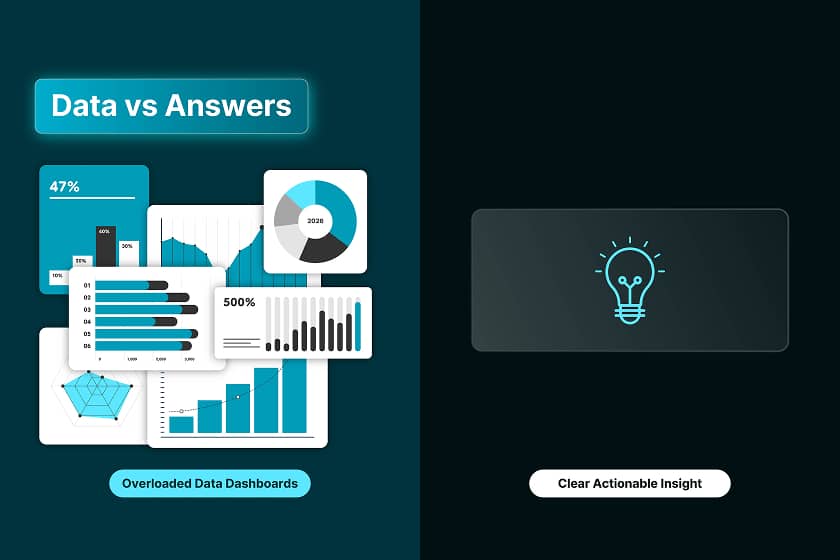
Average teams build dashboards. They increase visibility. They make data available for anyone who wants to look.
Then they wonder why nobody looks.
The problem isn’t access to data. It’s the cognitive load required to transform data into action. When every insight requires synthesis — clicking through charts, correlating metrics, pattern-matching across reports — insights don’t happen. People are busy. Dashboards become decoration.
Mature teams don’t ask humans to find insights. They build systems that surface them.
Instead of “Test failed on Device X,” deliver “Test failed due to memory pressure on Device X, matching a pattern we’ve seen 3 times this week on low-RAM Android devices. Here’s the likely cause and suggested fix.”
Instead of “Coverage is 73%,” deliver “Coverage dropped 4% in the payments module after last week’s refactor. These 12 paths are now untested. Here’s the risk assessment.”
The maturity leap isn’t better dashboards. It’s moving from “data available” to “answers delivered.”
The Compounding Effect
Here’s what surprised us most as we studied mature testing organizations: these three shifts don’t just add up. They multiply.
Speed creates room for intelligence. When feedback loops are tight, you can afford sophisticated selection logic. You have time to be precise. Intelligence improves signal quality. When the system makes smart decisions about what to run and what to surface, the results that reach humans are more meaningful.
Better signals accelerate learning. When results are trustworthy and clear, teams act on them immediately. No second-guessing. No triage overhead. Faster learning improves the system. Each cycle teaches the system something. Patterns become clearer. Decisions become sharper. The system gets better at its job.
And then you have a flywheel. Speed enables intelligence enables insight enables speed. The system compounds. Teams in the competing state experience testing as friction — something to manage, minimize, work around.
Teams in the compounding state experience testing as acceleration — something that enables confidence, learning, and speed. Same activity. Different system. Different experience.
What We’re Building
At Pcloudy, we are building one system where speed, intelligence, and insight are designed to reinforce each other.
- Infrastructure that eliminates wait states — so speed is the foundation, not an aspiration.
- Intelligence that automates decisions — so human judgment focuses where it matters.
- Insights that deliver answers — so action follows results without friction.
We haven’t solved every problem in testing. It remains genuinely hard. Edge cases surprise us. New challenges emerge. We’re learning alongside the teams we work with. But we’ve seen the compounding effect when these three work together. Teams that stopped fighting their testing systems. Teams that trust their results. Teams that ship with confidence instead of anxiety.
That’s possible for every team.
A Concluding Thought
We do want to leave you with this one question: Does your testing system compound — or compete?
If it competes, you’re not alone. Most teams are there. The path forward isn’t a dramatic reinvention but a steady alignment in the three shifts we described: optimizing for truth instead of tests, automating decisions instead of just execution, delivering answers instead of just data.
Small changes in the right places compound over time.
If your team is ready to start that journey — or if you’re stuck and want to talk through where to begin — we’d love to hear from you.
Thank you for reading.
Start with Pcloudy for free and see what the maturity leap feels like.
Read More:
How to Test Camera-Based Features (QR, AR, Document Scanning) on Real Devices
Why is Testing Always a Blocker and How to Change That?
Battery Drain Testing for Mobile Apps: The Complete QA Guide
Why Testing Breaks at Scale (And What High-Performing Teams Do Differently)