Did you know that 78% of global companies are already using AI in their operations? Some of the best testing tools in 2026 aim to combine high-quality releases with accelerated app testing, and HeadSpin happens to be one of them.
However, with so many mobile testing alternatives evolving with user needs, there are plenty of scalable options for organizations to choose from, especially if they prioritize cross-platform support and AI-powered automation to streamline web and mobile app QA workflows. In this guide, we are going to take a detailed look at the top 10 HeadSpin competitors that can offer faster and smarter testing.
Table of Contents
What Makes a Good HeadSpin Alternative?
Picking out the right HeadSpin alternative means not only looking for a core capability match but also adopting enhanced efficiency, scalability, and flexibility meant for modern QA workflows. A promising alternative should offer support for highly reliable and faster mobile lab testing by combining seamless integrations, automation, and real device access.
Key Features to Consider
Here are some key factors that you should consider while considering HeadSpin competitors for your organization.
- Cross-Browser and Cross-Platform Testing
The best HeadSpin alternatives would always offer support for testing across a wide array of iOS, Android, and web browsers, including all the legacy versions. This ensures consistency in app behavior for all users, thereby reducing compatibility issues and enhancing UX.
- Real Device Testing
This feature is actually what segregates the best of the tools from the good enough ones. Access to a wide spectrum of real devices is crucial for highly accurate performance analysis and capturing problems that simulators or emulators might often miss out on. Some of these problems include sensor-related functionality, device-specific quirks, network behavior, and battery usage.
- Test Automation for Accelerated Test Cycles
Automation features such as self-healing scripts and AI-powered test execution facilitate the reduction of manual effort for QA teams, rank high-risk tests according to their priority, and accelerate release cycles without having to compromise on quality.
- CI/CD Pipeline Integration
Smooth integration with CI/CD tools such as Azure DevOps, Gitlab, GitHub Actions, and Jenkins allows QA teams to fully implement continuous testing, get faster feedback, and fix problems early on and quickly during development.
- On-Premise or Cloud-Based Solutions
Flexible deployment options, whether they be on-premise for the purposes of internal security requirements or cloud-based for better scalability and testing, allow QA teams to select the appropriate setup aligning with their budget, organizational policies, and workflow.
Choosing the Right Tool
Test on real devices. Ship with confidence.
Choosing the right HeadSpin alternative for an organization depends on budget, required features, specific testing requirements, and team size. Here are some factors that come into play.
- CI/CD-focused QA teams make the most out of platforms that have seamless integration and automation features.
- Cross-platform apps or mobile-first applications need real device access across various browsers and OS versions.
- Enterprise teams can value broader browser or device coverage, security controls, advanced automation, etc.
- Startups or small teams can prioritize cloud-based scalability and affordability.
Also Read: Why AI Belongs in the Testing Stack, And What It Actually Does When It Gets There?
Top 10 Best HeadSpin Alternatives
Choosing the appropriate HeadSpin alternative helps teams in optimizing web app and mobile testing with cost-effective scalability, AI-powered automation, and better device coverage. Let’s check out a detailed look at the top 10 best HeadSpin alternatives, highlighting strengths, key features, and why they stand out.
1. Pcloudy

Key Features:
- Comprehensive support for hybrid, native, and web applications
- Detailed analytics and reporting on dashboards
- Real device testing on 5000+ browsers and devices
- Multiple form factors and OS versions
- Faster testing cycles because of parallel test execution across various devices
- Elite performance monitoring including CPU, Network, memory, and battery usage
- On-demand scalability, thanks to the cloud-based platform
- Integration with CI/CD pipelines such as Azure Devops, GitHub Actions, and Jenkins.
- Automation with features such as dynamic test prioritization, predictive failure detection, and self-healing scripts
Why It Stands Out:
Pcloudy’s AI-powered automation is ideal for faster and smarter testing for modern agile environments. Environments big on continuous testing, the seamless integration with CI/ CD and devops pipelines makes things easier.
2. BrowserStack
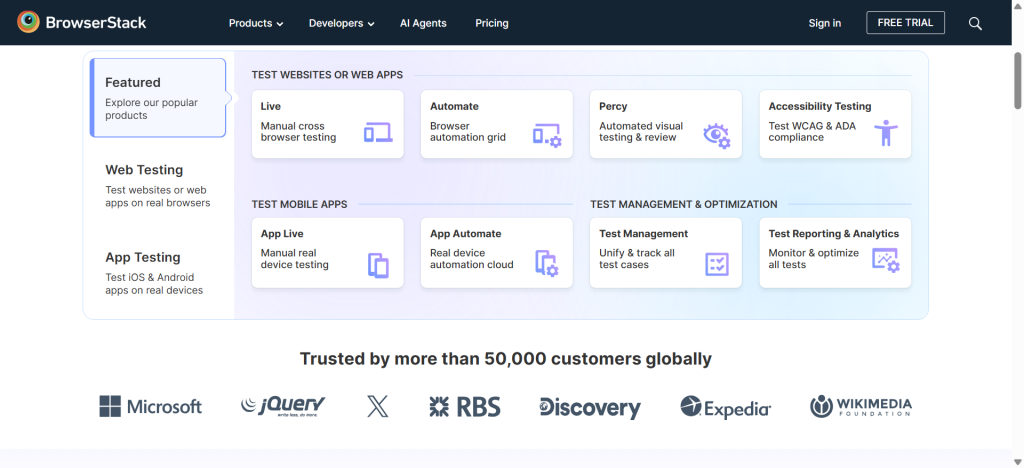
BrowserStack is another widely used mobile and and cross-browser testing platform that offers both virtual and real device testing. It serves teams that require immediate access to a wide variety of browsers and devices.
Key Features:
- Access to more than 2000 real browsers and devices
- Automated testing with Cypress, Appium, and Selenium
- Detailed reporting and analytics
- Live testing as well as debugging with real-time insights
Why It Stands Out:
BrowserStack pioneers in manual as well as automated cross browser testing with strong collaboration and CI/CD integration tools for most DevOps teams.
3. Sauce Labs

Sauce Labs is also a cloud-based testing platform famous for its extensive browser and device coverage. It offers extensive support for both manual as well as automated testing workflows.
Key Features:
- 900+ browsers and real devices for mobile and web app testing
- Automated testing support, thanks to JavaScript, Appium, and Selenium
- Performance insights and real-time testing analytics
- Integration with popular CI tools such as GitHub Actions and Jenkins
Why It Stands Out:
Sauce Labs stands out because of its advanced debugging and visual testing capabilities, which make it appropriate for enterprise-level, large-scale testing.
Also Read: How to Test Network Switching (WiFi ↔ 4G ↔ 5G) in Real-Time
4. Testmuai

Testmuai, is a cloud-based testing solution with special emphasis on cross-browser compatibility as well as visual regression testing for both mobile and web applications.
Key Features:
- Faster feedback with the help of parallel test execution
- Real-time testing on more than 2,000 devices and browsers
- Visual regression testing along with screenshot comparison tools
Why It Stands Out:
LambdaTest offers flexibility for both manual as well as automated testing with its strong visual regression tools makes it stand out as it provides consistent user interface across various devices.
5. Kobiton
Kobiton offers real-device testing for mobile apps, focusing on automation and AI-driven test automation workflows. Ideally, it’s a great tool for mobile-first teams.
Key Features:
- Real device testing on both iOS and Android
- Automated and manual testing with Selenium and Appium
- AI-powered test automation for the purposes of optimizing test execution
- Seamless CI/CD integrations for continuous testing
Why It Stands Out:
Kobiton offers support for both on-premise and cloud deployments, thereby offering flexibility for QA teams that have varying infrastructural needs.
6. TestComplete
TestComplete is one of the most robust testing suites out there designed for mobile app and cross browser testing with both automated and manual workflows.
Key Features:
- CI/CD integration with popular tools such as Azure DevOps and Jenkins
- Support for both real devices and emulators
- Visual testing as well as detailed debugging tools
- Easy test creation, thanks to record and playback features
Why It Stands Out:
It provides comprehensive test automation capabilities, including but not limited to AI-powered visual testing. This makes it ideal for QA teams that are looking forward to easy test creation and flexible scripting.
7. CrossBrowserTesting
CrossBrowserTesting emphasizes cross-platform testing to help QA teams ensure mobile and web apps work flawlessly across various browsers and devices.
Key Features:
- Integration with Jenkins, Slack, and GitHub
- Real browsers and devices for testing
- Visual testing and screenshots for high UI consistency
- Automated testing with Appium and Selenium
Why It Stands Out
Cross browser testing is one of the most affordable feature-rich solutions for QA teams that prefer strong mobile testing and cross browser testing capabilities within their budget.
8. Perfecto
Perfecto is another leading cloud-based testing platform, especially optimized for mobile testing and enterprise-scale web testing as it combines real device access with top notch automation.
Key Features:
- Real device and browser automated testing with Espresso, Appium, and Selenium.
- Real-time analytics and reporting
- CI/CD integration to facilitate continuous testing
Why It Stands Out:
Perfecto is designed for large enterprises, offering in-depth insights, extensive device coverage, and robust test automation.
9. App Center by Microsoft
App Center has been a powerful hub for mobile app testing, closely integrated with one of the best ecosystems, that is, Microsoft. If a team is using Visual Studio or Azure DevOps, App Center by Microsoft is the way to go.
Key Features:
- Cloud-powered analytics and test reporting
- Offers support for automated testing with Selenium
- See the integration with Visual Studio and Azure DevOps
- Real device testing for both iOS and Android
Why It Stands Out:
App center by Microsoft is ideal for teams that look forward to seamless integration with other Microsoft tools and overall cost-effective testing solutions.
10. Ghost Inspector
Ghost inspector is a browser-focused user-friendly test automation platform that simplifies regression and UI testing for web applications. Here are its key features.
Key Features:
- State-of-the-art UI consistency with visual regression testing
- Smooth integration with GitHub, Jira, and Slack
- Automated cross-browser testing featuring real-time feedback
- Easy test creation and execution thanks to record-and-replay
Why It Stands Out:
Ghost Inspector is perfect for users or teams whose primary focus is on UI consistency. The setup is easy, and the learning curve is a lot faster than most other tools.
Also Check Out: Your Tests Passed. But Is Your Release Actually Ready?
Benefits of Using HeadSpin Alternatives
Test on real devices. Ship with confidence.
Modern QA teams can gain some significant advantages in scalability, accuracy, and efficiency if they opt for the right HeadSpin alternative. All the platforms above are designed to efficiently handle the demands of both web and mobile app testing in 2026, providing features that go way beyond just traditional testing solutions. Some of the core benefits include:
- Real Device Testing
Most HeadSpin alternatives offer real device testing, unlike emulators, which offer more reliable insights into battery usage, network conditions, sensor interactions, and performance. For instance, Pcloudy offers access to thousands of real devices on demand, therefore enabling tests reflecting actual user experiences.
- Broader Browser and Device Coverage
Alternatives such as Pcloudy and BrowserStack offer extensive coverage across thousands of real devices as well as browser versions, including both older and legacy models. It reduces the risk of device-specific bugs and promises a consistent UX for end users, and helps teams identify compatibility issues early on.
- Cost Effectiveness
If features of smaller platforms like Ghost Inspector are enough for your organizational needs, these can turn out to be pretty cost-effective solutions, thanks to their affordable pricing plans and robust features such as cloud access, automation support, and real device testing. Therefore, small as well as mid-sized teams can also implement quality testing workflows without having to break the bank.
- AI-Driven Testing and Automation
Modern HeadSpin alternatives, such as Kobiton and Pcloudy, integrate AI-powered automation for optimizing testing workflows and reducing manual efforts with features such as test case prioritization, predictive error detection, and self-healing scripts. Besides speeding up test cycles, it also increases accuracy, which helps QA teams in catching critical bugs earlier.
Why Choose HeadSpin Alternatives
As capable as HeadSpin remains, many of its alternatives offer improved flexibility, smarter automation features, and cost savings, making them more appealing for modern testing teams. Let’s check out why organizations could consider choosing HeadSpin alternatives.
- Better AI-Powered Automation
Alternatives such as Pcloudy leverage the power of AI-based automation to provide capabilities such as dynamic test case prioritization, self-healing scripts, and predictive failure detection to make testing even smarter and optimize workflows.
- Cost Effectiveness
HeadSpin alternatives, such as Ghost Inspector, offer more affordable pricing plans, better suited to startups and smaller organizations. Despite the lower costs, such platforms do offer enterprise-level capabilities to help teams maintain a comprehensive test coverage while cutting down on overall QA expenses.
- Improved Scalability and Flexibility
HeadSpin alternatives such as Pcloudy, LambdaTest, and BrowserStack allow scalable test execution on demand by running multiple tests in parallel across various browsers, OS versions, and devices. Such a high-level of flexibility ensures that differently sized teams can match developing cycles by adjusting their testing capacity without having to invest in additional hardware. Moreover, real-time access to a wide array of devices also facilitates quicker bug detection and faster testing, which offers support for accelerated release schedules.
Read More: What Complete Testing Looks Like When Everything Connects
Conclusion
Organizations are realizing that there are plenty of HeadSpin alternatives, such as Pcloudy, TestMu AI, and BrowserStack with enhanced features and streamlined workflows. For instance, Pcloudy goes deeper into test realism as well as control by simulating real-world conditions that a lot of competitors aren’t able to completely match. Sign up for its 30-day free trial and check out yourself.
FAQs
What is the best HeadSpin alternative for mobile app testing?
While the best HeadSpin alternative depends on the unique needs of an organization’s QA team, Pcloudy often stands out with its built-in network simulation, private cloud deployment, and device-level performance metrics, thus making it ideal for both iOS and Android testing at scale.
How do HeadSpin competitors cater to real device testing?
Most HeadSpin alternatives, such as Pcloudy, Kobiton, and BrowserStack, offer access to thousands of real devices on demand, which allows QA teams to test applications under various real-world conditions, such as sensor behavior, battery usage, and network variations, which emulators can’t fully replicate.
Are there any free HeadSpin alternatives for automated testing?
Yes, some of the platforms, such as Ghost Inspector or App Center, offer limited free tiers, and Pcloudy, with its 30-day free trial, allows users to experiment with real device access and various automated testing workflows.
Read More:

 Jeroline

 Nazneen Ahmed